


What is Cy-IAPCC?
The Cyprus International Action Plan for Children with Cancer (Cy-IAPCC) is a national and international initiative launched in 2023 and based in Cyprus.
It is an innovative humanitarian and public-health initiative founded and led by Professor Loizos G. Loizou, drawing on more than four decades of clinical, academic and organisational experience in paediatric oncology and haematology.
Its purpose is to improve the care of children and adolescents with cancer and other serious diseases by expanding access to life-saving medicines, strengthening professional capacity, supporting health systems, promoting public-health education and reducing global inequalities in health.
Vision
To help increase childhood-cancer cure rates worldwide—particularly in countries where inequalities remain profound—and to support a future in which every child, regardless of country or circumstances, has access to early diagnosis, appropriate treatment, supportive care and long-term follow-up.
Main Pillars of Action
• Medicines, vaccines and medical supplies: Providing essential medicines, chemotherapy, supportive treatments, vaccines and medical supplies to countries and centres in need.
• Education and capacity building: Organising international seminars, clinical training, professional exchanges and educational programmes for healthcare professionals, young people and the public; transferring knowledge for the safe and effective application of treatment protocols in resource-limited settings.
• Research and documentation: Promoting research on the epidemiology, causes, outcomes and prevention of childhood and adolescent cancer, and supporting evidence-based planning in countries where reliable data remain limited.
• Registries, expertise and health-system development: Supporting population-based childhood-cancer registries, organised paediatric oncology services, national plans and sustainable systems of care.
• Telemedicine and digital technology: Developing mechanisms for remote consultation, education, follow-up and collaboration among specialists and institutions in different countries.
• Humanitarian action and international cooperation: Building practical partnerships with governments, international organisations, professional societies, universities, non-governmental organisations and civil-society groups.
• Public-health education and prevention: Producing and disseminating reliable multilingual digital health information on cancer, infectious diseases, medicines, vaccination, nutrition and other major public-health priorities.
• Holistic and family-centred support: Developing supportive, palliative, psychosocial and therapeutic-recreation activities for children, adolescents and families affected by cancer or other serious diseases.
Achievements and Actions, 2023–2026
Completed and established actions
• Essential medicines and chemotherapy: Medicines, chemotherapy and supportive treatments have been provided or organised for paediatric oncology services in African countries, including Senegal, Burkina Faso, Côte d’Ivoire, Botswana and Morocco, together with support for the appropriate use of treatment protocols.
• Botswana and Southern Africa cooperation: Collaboration has been developed with Botswana, the Southern African Development Community (SADC) and the World Health Organization to support a national childhood-cancer plan, professional education and telemedicine-oriented cooperation.
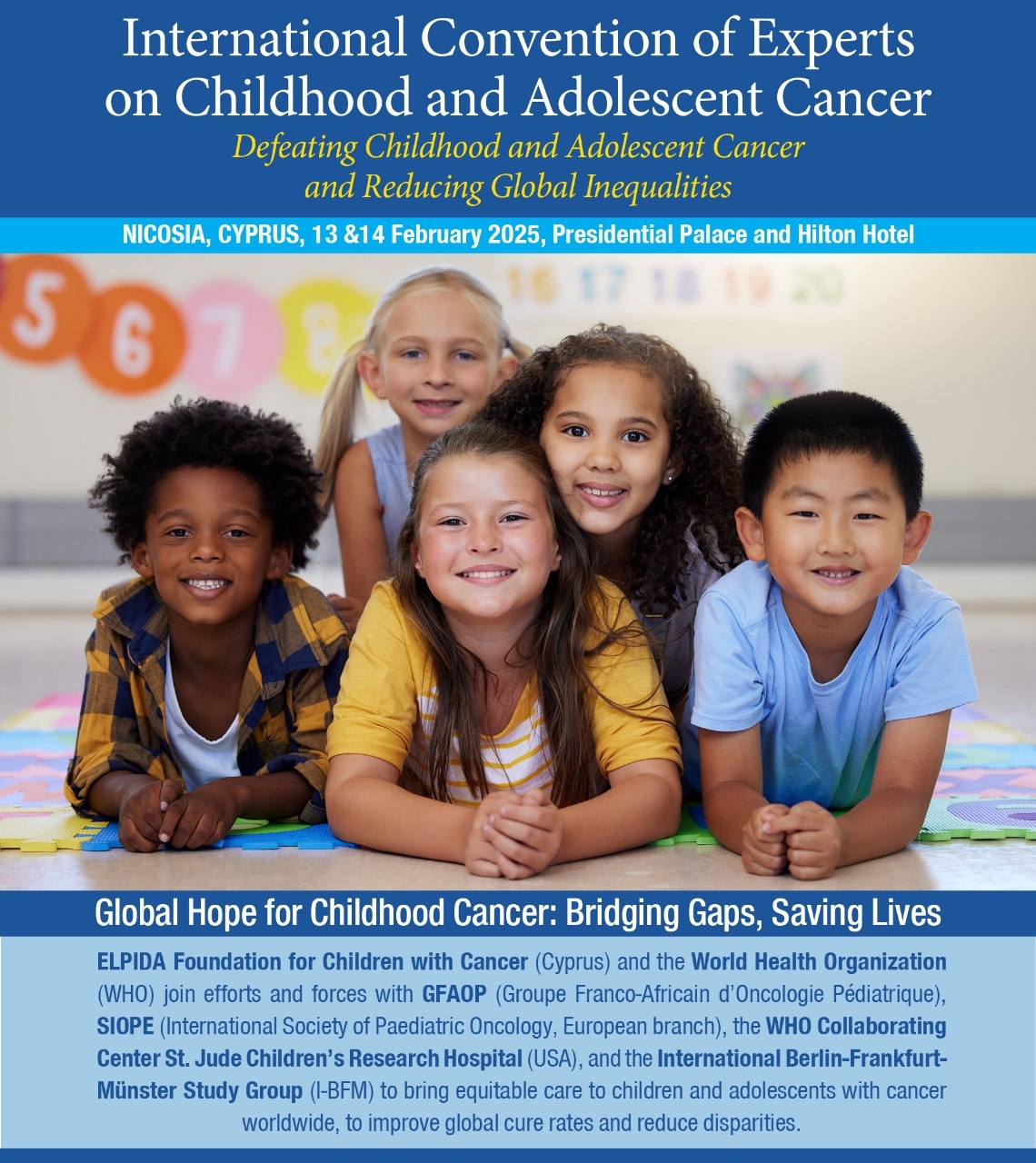
• First International Expert Conference: The conference “Defeating Childhood and Adolescent Cancer and Reducing Global Inequalities” was held in Nicosia in February 2025, with approximately 300 participants, including 50 experts from 26 countries. MoU with GFAOP
• Memorandum of Understanding with the Franco-African Group of Paediatric Oncology (GFAOP): A formal Memorandum of Understanding was signed with the Franco-African Group of Paediatric Oncology (GFAOP), establishing a structured framework for cooperation with its network of paediatric oncology centres across Francophone Africa. The agreement supports joint actions in access to medicines, professional training, transfer of expertise, capacity building and the development of sustainable programmes for children and adolescents with cancer in countries with limited resources.
• Memorandum of Understanding with the Ministry of Foreign Affairs of the Republic of Cyprus and CyprusAid: A formal Memorandum of Understanding was signed with the Ministry of Foreign Affairs of the Republic of Cyprus and CyprusAid, the Republic of Cyprus’ official development cooperation programme. The agreement established a framework for collaboration in the planning and implementation of international humanitarian and health-related actions, including support for access to essential medicines, capacity building, professional training and assistance to children, families and communities in countries with limited resources.
• International presentation in Athens: The Cy-IAPCC model, its humanitarian actions and its international partnerships were presented in Athens in November 2025, increasing its visibility and strengthening opportunities for cooperation.
• Paediatric Palliative Care Group: The Cy-IAPCC Paediatric Palliative Care Group was established to promote comprehensive, compassionate and family-centred care.
• Therapeutic Recreation Programme: An innovative programme for children, adolescents and families affected by cancer was launched in Cyprus, with its first three-day activity beginning on 20 June 2026.
Major initiatives advanced in 2026
• Burkina Faso and Côte d’Ivoire: Further consignments and practical arrangements for essential anticancer medicines and chemotherapy were undertaken to support children treated in collaborating paediatric oncology centres.
• Morocco: Support was advanced for the provision of essential medicines for children and adolescents requiring specialised haematology and oncology treatment.
• HPV vaccination for Botswana: A major vaccine-donation initiative was developed to provide 6,000 doses of HPV vaccine for girls aged 9–13 years, in collaboration with Botswana and UNICEF Procurement Services.
• Formal cooperation with UNICEF: A Memorandum of Understanding was concluded with UNICEF Procurement Services, creating a structured mechanism through which ELPIDA and Cy-IAPCC can procure and donate quality-assured vaccines, medicines and health commodities for countries in need.
• Training partnership with GFAOP and France: ELPIDA, Cy-IAPCC and the French-African Paediatric Oncology Group (GFAOP) developed a practical training and scholarship programme linking centres in Africa with Cyprus and France. The programme is designed to offer short, focused placements for healthcare professionals from low- and middle-income countries.
• WHO cooperation: Ongoing collaboration continued with WHO Europe and the WHO Country Office in Cyprus on childhood cancer, prevention, health education and actions aimed at reducing inequalities.
• African Union and Africa CDC engagement: Cooperation and dialogue were advanced with African institutions, including the African Union and Africa CDC, to support wider regional health action, awareness and capacity building.
• Global Digital Public Health Education Initiative: Cy-IAPCC expanded a multilingual digital-health programme that creates, disseminates and evaluates evidence-based public-health videos. Campaigns on the correct use of antibiotics, Ebola prevention and other health topics achieved extensive international reach, including millions of views across multiple countries and platforms.
Ongoing and Planned Actions
• Therapeutic recreation, November 2026: A further activity is planned for November 2026, building on the experience of the first programme.
• International family participation: The programme is being developed so that, in future phases, children and families from low- and middle-income countries may be invited to Cyprus for structured therapeutic recreation, respite, psychosocial support and shared experiences within the Cy-IAPCC framework.
• Expansion of medicines, vaccines and training: Cy-IAPCC will continue to identify priority needs, mobilise resources and establish practical collaborations that can directly improve access to treatment, prevention and professional expertise.
Collaborations
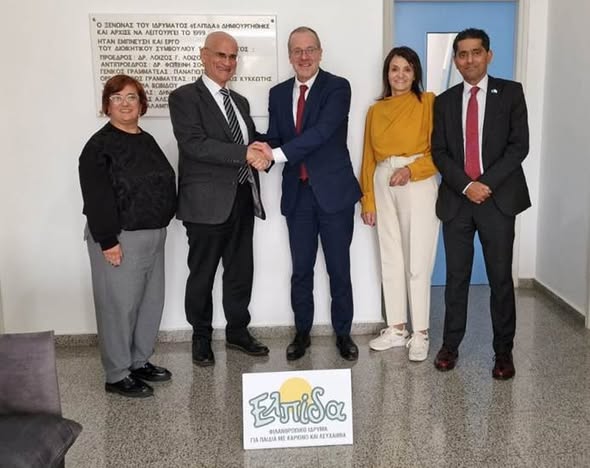
Cy-IAPCC is implemented with the support of the ELPIDA Foundation for Children and Adolescents with Cancer and through cooperation with international and regional partners, including the World Health Organization, UNICEF, SIOP Europe, GFAOP, St. Jude Global, I-BFM, the African Union and Africa CDC.
It is also supported by the Republic of Cyprus through relevant ministries and services, including the Ministry of Foreign Affairs, CyprusAid and the Ministry of Health, as well as by professional bodies, universities, civil-society organisations and international partners such as the Cyprus Medical Association, the Cyprus Paediatric Society, the University of Nicosia Medical School, the European University Cyprus School of Medicine and the American Hellenic Educational Progressive Association (AHEPA).
Why Cy-IAPCC Matters
Cy-IAPCC seeks to save and improve the lives of children through practical actions that reduce inequalities and expand access to life-saving treatment, prevention, knowledge and compassionate care for children and adolescents with cancer or other serious diseases.
Through Cy-IAPCC, Cyprus is developing a distinctive role as an international hub of cooperation, solidarity, education and humanitarian contribution for children. The initiative offers a scalable and ethically grounded model of international health cooperation, led from Cyprus and built on partnership, scientific evidence, transparency and human solidarity.
Knowledge, cooperation and solidarity can save children’s lives.
Implementation Team
Professor Loizos G. Loizou
Founder and Head, Cy-IAPCC
President, ELPIDA Foundation for Children and Adolescents with Cancer
Professor of Medicine, University of Nicosia Medical School
Tel: +357 99 660662 | Email:
Ms Evi Parpa
Social Worker, ELPIDA Foundation
Tel: +357 99 517401 | Email:
